3D-printing waste · Switzerland
Spool³turning 3D-printing waste back into filament
Failed prints, supports, purge, scraps, and prototypes nobody needs any more end up in the incinerator. Before buying a single machine, Spool³ measures how much waste there really is, workshop by workshop. Then we decide, with figures, how to recycle it.
11
interested actors
5 of them weighing their waste
6
cantons
~22
kg/month declared
50+
organisations contacted
Do you 3D print? Join the 11 actors already on board.
Take partThe goal
One shared recycling line for Switzerland, fed by local collection points
No workshop produces enough waste on its own to run a recycling line. Together, they might. In the long run, Spool³ aims for one shared line in Switzerland, fed by a network of collection points across the country: each workshop drops its sorted waste close by, the shared line turns it into filament, and the spools go back to local workshops.
Collection points
Across the country, close to those who print: fablabs, schools, print shops, individuals.
A shared line
One recycling line for everyone, instead of a machine in every workshop.
Local filament
The filament comes back to the workshops that produced the waste.
This is the goal, not today's reality: the measurements first tell us whether it can be reached.
Want to follow the initiative?
Keep me informedWhat we weigh
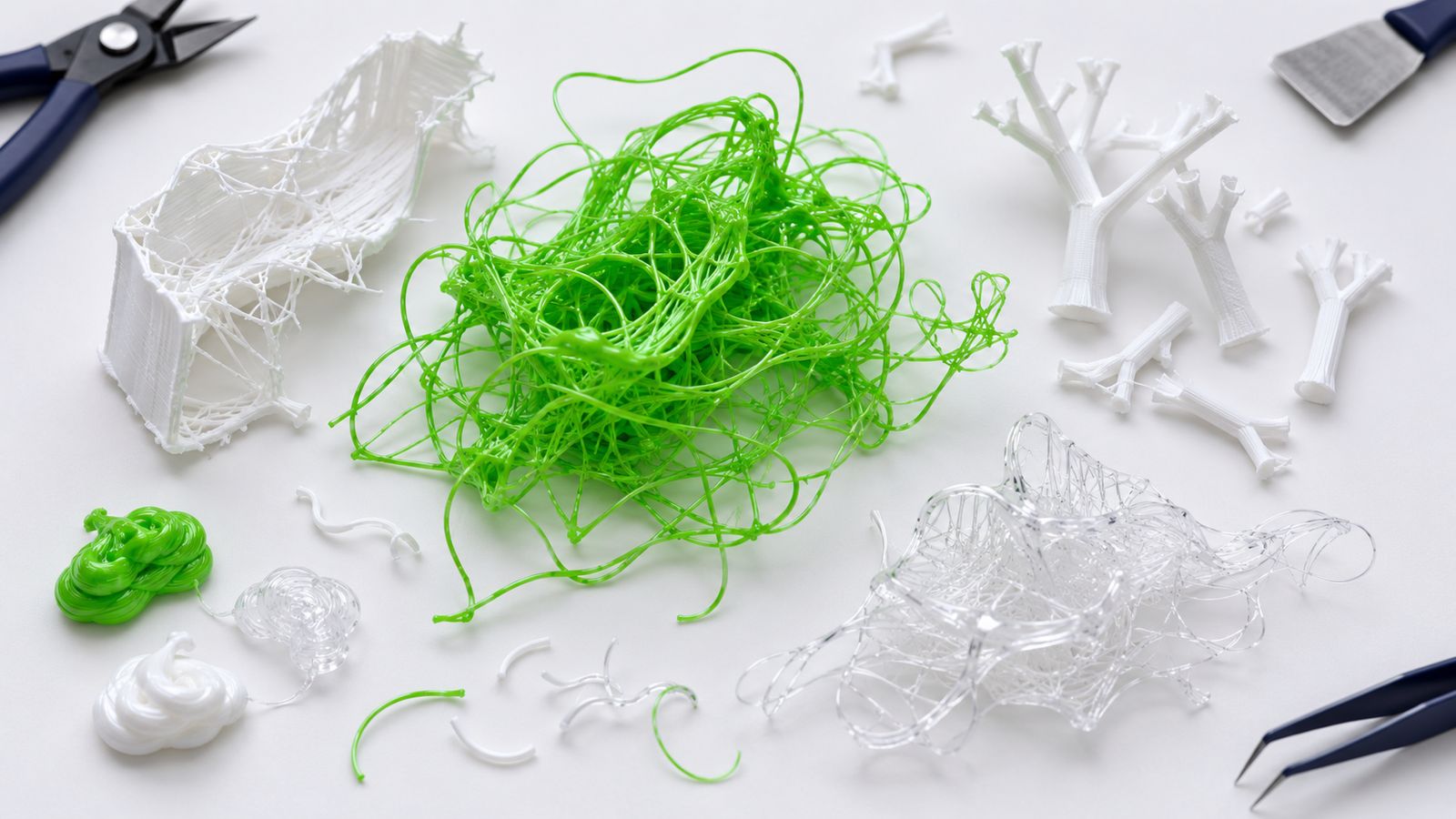
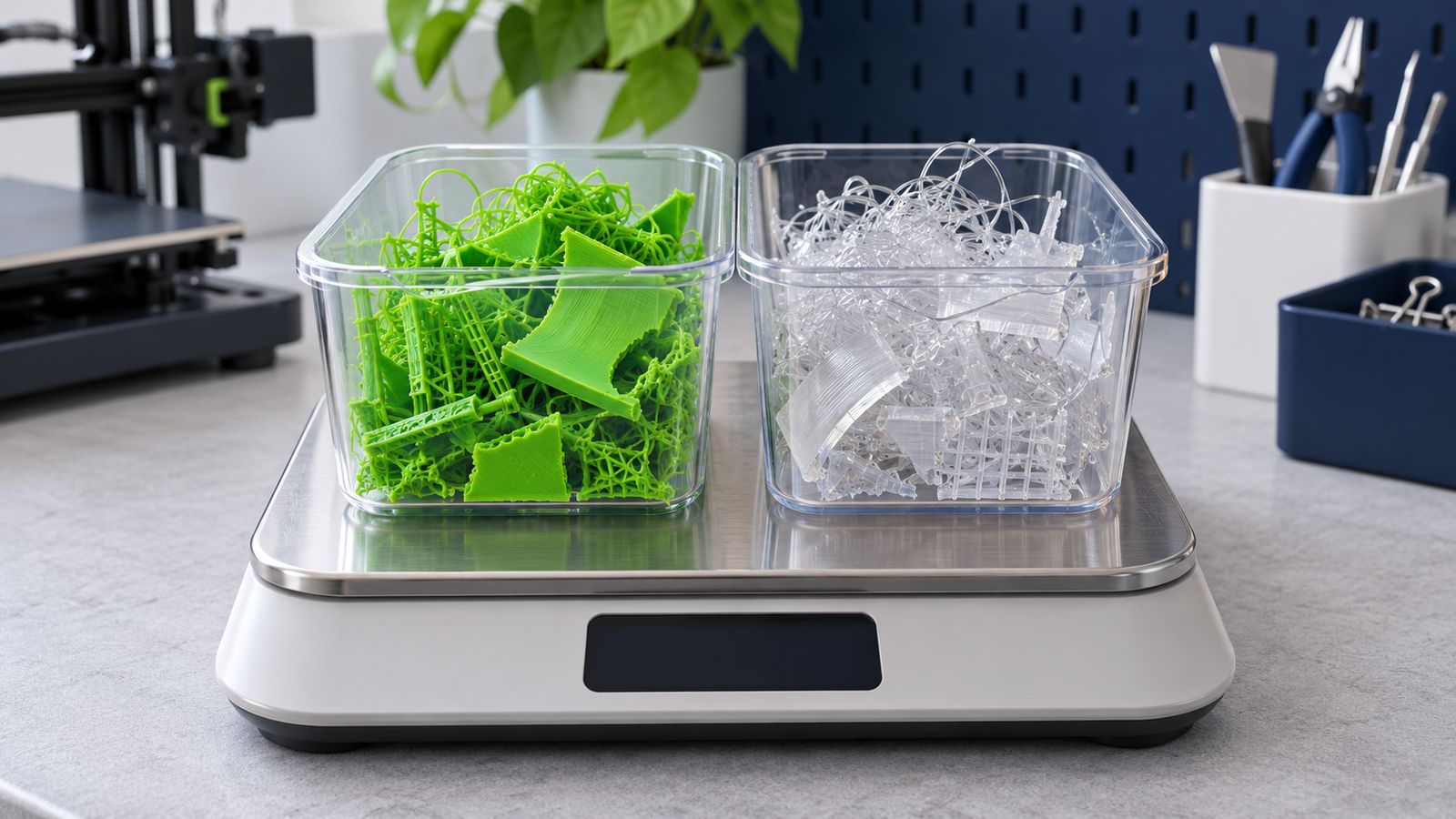
Failed prints
The spaghetti and the prints that came loose.
Supports
Trees, rafts and brims, once removed.
Purge
The blobs from colour and material changes.
Filament scraps
Ends of spools and broken pieces.
Obsolete prototypes
Test parts and earlier versions of a project: they did their job and are no longer needed.
Not just scraps
The prototypes nobody needs any more
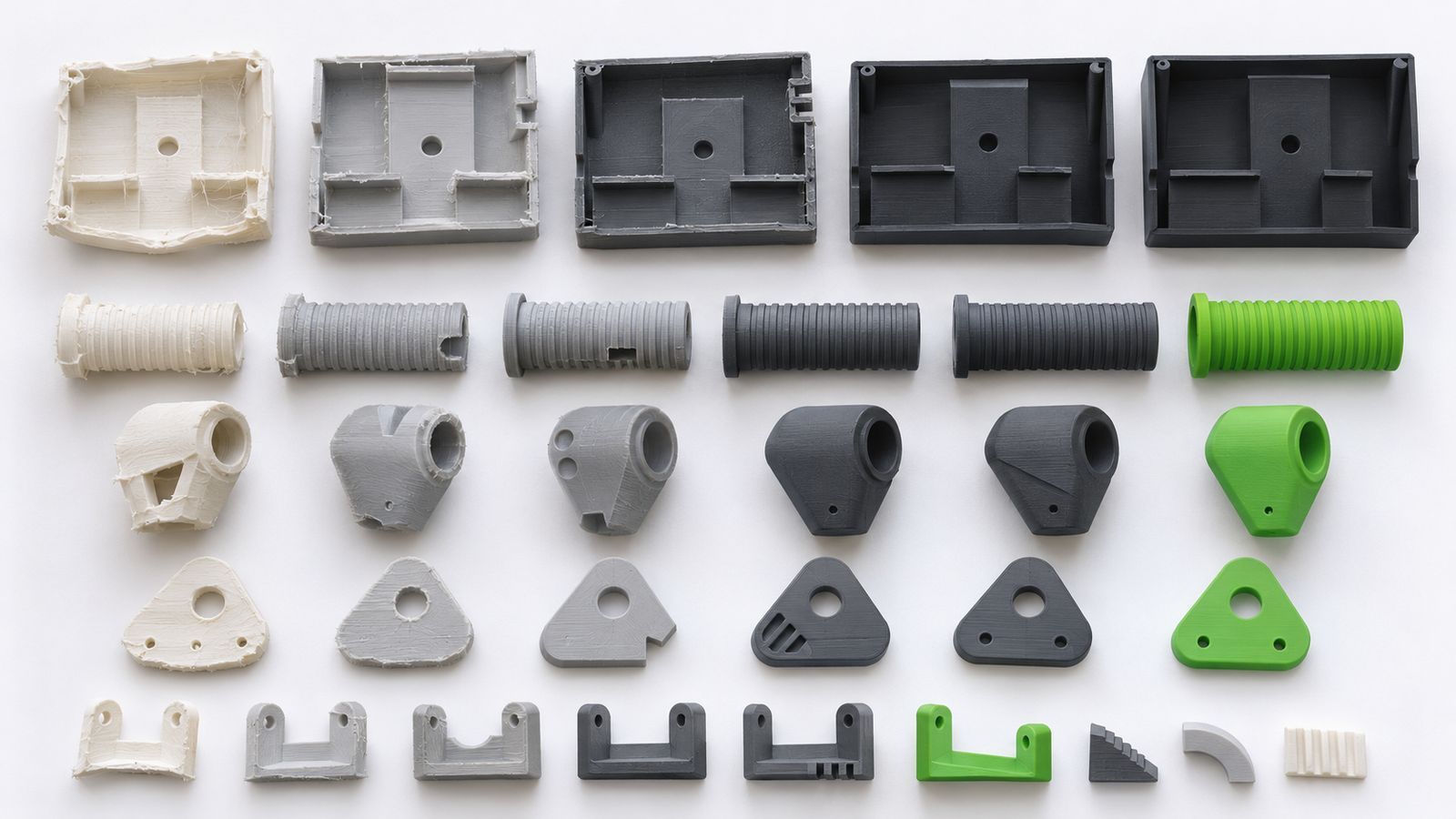
A project goes through dozens of versions. Our own ARC-1 controller did: enclosures, grips and test parts that each did their job, then were replaced. Some workshops keep whole boxes of them. That is material too, often a single plastic, and it counts in the measurement.
Plan
The plan
Measure first. Each step decides whether the next one is worth it.
Done · Oct.–Nov. 2026
Survey
Workshops, fablabs and schools told us how much they print and throw away.
In progress · Until end of January 2027
Measurements
Partner workshops weigh their waste for 4 weeks, sorted by material.
Next · Early 2027
Recycling options
Which way to turn the waste into filament: our own line, a subcontractor, or a shared line.
Next · Early 2027
Funding and form
Association or company? Which foundations, partners or public programmes?
Next · Then
Collection and business plan
Only then: the network of collection points, the shared line and its equipment.
Map
Who is on board
Workshops, schools and labs that answered positively, by canton only: no one is named.
NE
Neuchâtel
2 weighing their waste
1 interested
- Interested
- Weighing now
- sign-ups via this page
Is your canton still empty? Put it on the map.
Add my workshop~22 kg
That is what 8 workshops told us they throw away each month. Local recycling needs about 15 times more: every workshop counts.
Waste
Waste identified so far
8 workshops gave us a figure: between 0.2 and 7 kg of waste per month each, about 20 to 24 kg per month in total. Two one-off stocks of about 200 kg each were also reported: parts produced but never used, and test parts from a finished project.
What it takes to break even
Kilograms of waste collected per month, from our cost model. At CHF 19.90/kg the base case still loses money at 2 tonnes a month. That is why we measure before we invest.
Simulator
Play with the numbers
At this rate, about 115 workshops are needed to reach the optimistic threshold.
Assumes 75 % of the waste becomes filament (cost model, base case). Indicative only.
22 kg
collected per month
202 kg
of filament per year
7 %
of the optimistic threshold
Every workshop moves these numbers.
Join the measurementProcess
How 3D-printing waste becomes filament
What we learned from machine makers, student teams and makerspaces. Click a step.
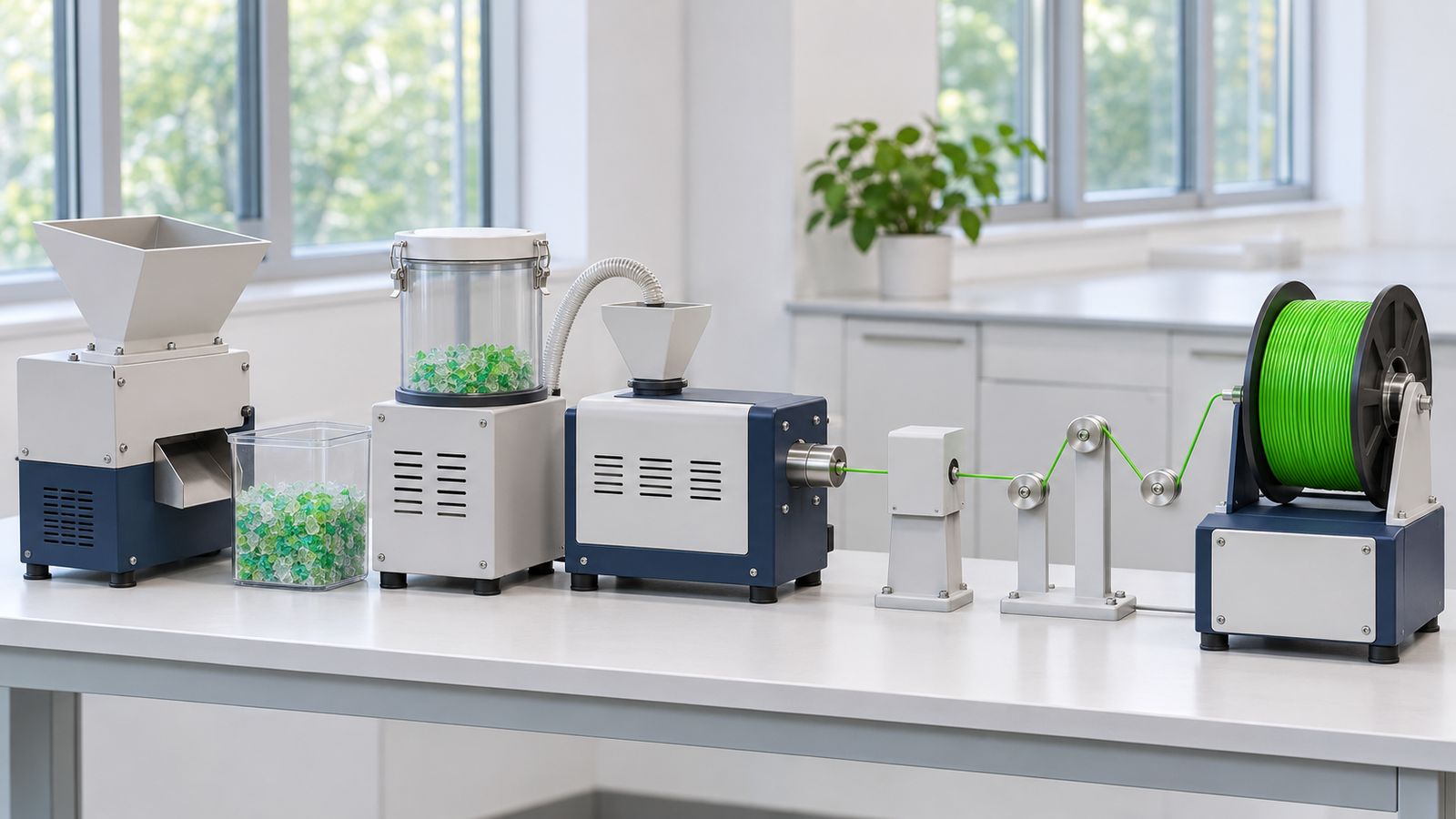
1 material per batch
Sort
By material: PLA, PETG, others. Never mix PLA and PETG. Remove metal, labels and dirt: desktop lines have no melt filter, so every impurity ends up in the spool.
What makes it hard
- Diameter and drying are the two critical points, according to the teams we met.
- PETG loses little quality up to about 5 recycling cycles; PLA degrades faster, so some virgin material is added.
- Announced output is not guaranteed output: holding ±0.05 mm at full speed is the hard part.
Solutions
Three recycling solutions under evaluation
From a desktop recycler to a modular line. None is chosen yet: the choice depends on the volumes measured and on funding.
Under evaluation
Desktop recycler
Creality M1 + R1
A desktop shredder and filament maker. A partner workshop has ordered one: our first real tests on printing waste.
See the productCompact line (Netherlands)
3devo
Shredder, dryer and extruder in one compact line, built for continuous production.
See the productModular line (Germany)
QiTech
Shredder, extruder and winder sold separately: a line that can grow with the volumes.
See the productYour figures help us choose the right solution.
Join the measurementTake part
Join Spool³
Questions
What can I do with my failed 3D prints and old prototypes?
Keep them aside, sorted by material (PLA, PETG). Join the Spool³ measurement: your figures help decide whether local recycling in Switzerland is worth it.
Do you collect my waste?
Not yet. The goal is a network of collection points across Switzerland feeding a shared recycling line. But the pilot measures first: collection comes after the measurements, once the recycling solution and the form of the initiative are decided. What happens to your weighed waste is agreed with you.
How much does it cost?
Nothing. Taking part in the measurement and the report are free.
Who can take part?
Fablabs, schools, 3D-printing shops, model workshops and companies that print in FDM, anywhere in Switzerland, and individuals who print a lot at home. The first partners are in Suisse romande.
Will this be a company or an association?
That is one of the questions of the next step, after the measurements end in January 2027.
Who is behind Spool³?
Outland Sight Sàrl, an engineering and prototyping lab in Neuchâtel.
How do you say Spool³?
“Spool cube”: the 3 of 3D printing, and spools that come back again. Without the superscript, write spool3.
Figures updated on 28/11/2026